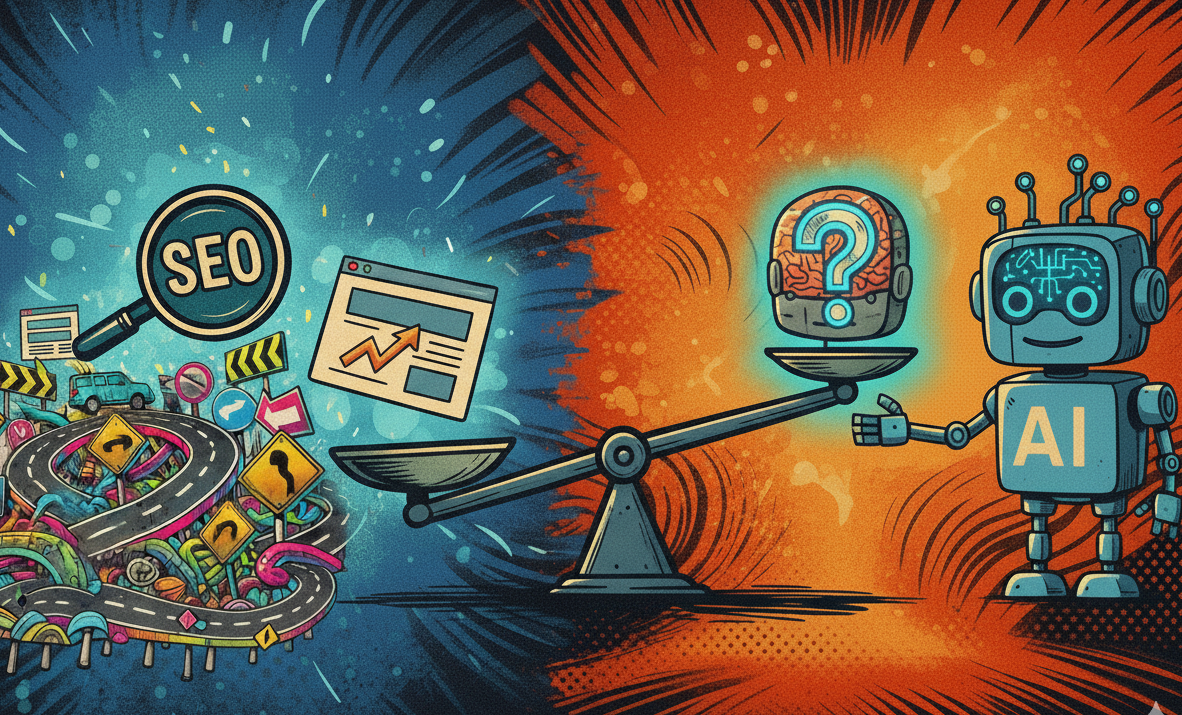
AI didn't make your SEO investment obsolete. It made it more valuable.
You've heard the warnings: ChatGPT is changing search, Perplexity is stealing traffic, Google's AI Overviews are killing clicks. The SEO strategy you've spent years building feels suddenly vulnerable.
Here's what those warnings miss: AI search tools need exactly what you've already built.
How AI Search Actually Works
When ChatGPT answers a question about your industry, it doesn't invent the response. It searches the web, evaluates sources, and cites the content it trusts. This process (retrieval-augmented generation, or RAG) relies entirely on traditional web signals.
- Domain authority.
- Quality backlinks.
- Well-structured content.
- Fast site speed.
- Mobile optimization.
These aren't relics of the pre-AI era. They're the foundation AI tools use to decide which businesses to cite and which to ignore.
Google confirmed it: normal SEO works for ranking in AI Overviews. The fundamentals you've invested in determine whether AI finds you, trusts you, and references you when customers ask questions related to your business.
The Real Shift
79% of people who use AI search believe it offers a better experience than traditional search engines. They're getting answers without clicking through to websites. Zero-click results dominate.
The businesses panicking about this shift built their SEO on manipulation. They created thin content designed to trick search engines, bought low-quality links, and focused on gaming the system rather than genuinely helping customers. AI has made those tactics completely ineffective.
But if your SEO has focused on demonstrating real expertise, creating genuinely helpful content, and building authority in your field, you're not just prepared for the AI era. You're already succeeding in it.
Your optimized content now appears in more places: traditional search results, ChatGPT responses, Perplexity citations, Bing Copilot answers, and Google's AI features.
What Changes, What Doesn't
The playing field expanded. The rules stayed the same.
- AI tools need authoritative sources.
- They scan for credibility signals.
- They prioritize sites with clear structure, relevant content, and established trust.
Exactly what quality SEO delivers.
Sites with strong SEO foundations get cited by AI. Sites with weak SEO disappear from both traditional results and AI answers.
The businesses winning now aren't abandoning SEO.
They're doubling down on fundamentals while adapting content structure for how AI processes information. Clear answers to specific questions. Structured data that helps AI understand context. Authority signals that establish trust.
Without solid technical optimization, quality content, and earned authority, AI tools have nothing to find and nothing to cite.